
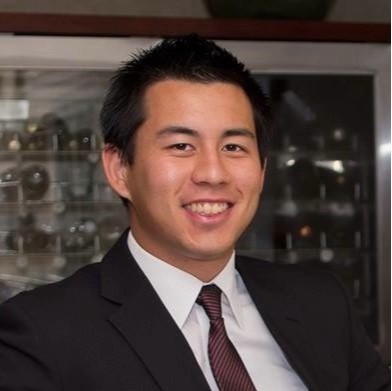
About the founder
My name is Shane Ravenelle, and I am an outpatient physical therapist with a passion for helping people overcome orthopedic injuries, vestibular disorders, and persistent pain.
Why does the body respond the way it does?
Early in my career, I found myself increasingly frustrated by patients who simply weren’t improving despite receiving what I had been taught were the right treatments. Frozen shoulders remained stuck. Post-operative knees that refused to bend. Patients experienced flare-ups after treatment that I couldn’t fully explain. Traditional approaches—soft tissue mobilization, joint mobilization, stretching, and strengthening—sometimes helped, but often they only got me so far.
I knew there had to be something I was missing.
That question became deeply personal when I suffered a significant lumbar disc herniation. The injury left me unable to walk normally, with numbness and weakness throughout my leg and calf. Suddenly, I wasn’t just treating pain—I was living it.
During my recovery, I sought help from physical therapists, massage therapists, acupuncturists, and other healthcare providers. Some treatments provided relief, while others made my symptoms worse. As I experienced setbacks and flare-ups, I kept asking myself: Why did my body react that way?
The answers I had learned in school and through traditional continuing education no longer felt complete. I realized that understanding muscles, tendons, and joints alone wasn’t enough. To truly understand movement and pain, I needed to better understand the system that controls it all—the nervous system.
That realization transformed the way I practice.
I immersed myself in studying neuroscience, pain science, neurodynamics, and the intricate relationship between the brain, spinal cord, peripheral nerves, and the body’s connective tissues. Rather than viewing pain and movement as isolated mechanical problems, I began to appreciate them as protective outputs of a highly intelligent nervous system.
As my understanding evolved, so did my clinical results.
Patients with frozen shoulders began gaining motion without forceful stretching. Stiff post-operative knees started bending without painful aggressive mobilizations. Individuals living with chronic pain experienced meaningful improvements while feeling safer and more comfortable throughout treatment. Instead of fighting against the body, I learned to work with it.
Those “aha” moments changed my career.
Today, I approach every patient and every educational opportunity through the lens of the nervous system. I believe that many movement limitations and pain experiences are not simply structural problems to be forced or fixed, but protective adaptations that can change when the nervous system feels safe enough to allow movement.
This philosophy has not only transformed the way I treat patients, but also the way I teach other healthcare professionals.
Through the Nervous Movement Institute, my mission is to help movement professionals develop a deeper understanding of how the nervous system influences movement, pain, tissue mobility, and human performance. My goal is to bridge the gap between traditional orthopedic practice and modern neuroscience so clinicians can confidently manage complex cases with greater precision, compassion, and effectiveness.
I believe the body is always communicating. When we learn to listen and understand the language of the nervous system, we can unlock new possibilities for healing, movement, and lasting change.
Why it exists
To make advanced movement science teachable, usable, and clinically meaningful.
The work is rooted in the belief that clinicians need more than protocols. They need principles, language, and frameworks that help them reason across biomechanics, motor control, physiological adaptation, and the complex tensegrity relationships between neural, vascular, lymphatic, fascial, and musculoskeletal systems.
Founder-led
Founded by Shane Ravenelle, Nervous Movement Institute is being built as a place for precise education, systems-based reasoning, and practical learning experiences for professionals who want to better understand how human movement organizes, adapts, protects, and changes.
Nervous? It's okay. Let's start with the basics.
Start with my free courses to get a foundation of the body's movement through a neural tensegrity lens.
Nervous Movement Institute — education for neural tissue freedom.